Wildyard: A Handwritten Font for Authentic Branding
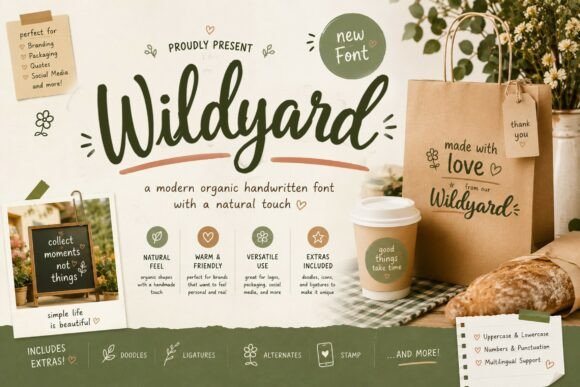
There's a particular quality in a design that feels genuinely human. It’s the slight imperfection in a hand-drawn line, the warmth of a note written by a friend, the comforting texture of a bakery's paper bag. In a digital world saturated with crisp, geometric perfection, this human touch has become a powerful differentiator. This is precisely the space where the Wildyard typeface lives. It’s not just a handwritten font; it’s a modern organic script inspired by the principles of slow living, handmade warmth, and natural storytelling. Its soft, imperfect strokes and cozy rhythm are designed to infuse projects with a friendly, authentic personality that feels both personal and professionally crafted.
The Visual Language of Wildyard: More Than Just Handwriting
When we talk about a premium font like Wildyard, we're discussing more than its letters. We're talking about its visual personality. The strokes have a gentle, uneven weight that mimics the pressure of a real pen on textured paper, avoiding the sterile uniformity of many digital scripts. The letterforms connect with a natural, flowing rhythm, creating a sense of movement and life. This isn't a frantic, energetic scrawl; it’s a calm, intentional hand. This makes Wildyard an exceptionally versatile creative font. It functions beautifully as a display font for headlines, where its character can shine, but its inherent legibility also allows it to be used for shorter blocks of text in contexts where warmth is paramount, like recipe cards or thank-you notes.
Understanding its style is key to using it effectively. As a script font, it carries a distinct voice. It whispers of farmhouse kitchens, artisan workshops, and weekend projects. This makes it a compelling alternative to more formal serif fonts or clean sans serif fonts when the goal is to establish a connection rooted in comfort and authenticity. It’s a typeface that doesn’t just display words; it conveys an ethos.
Where Wildyard Truly Shines: Practical Applications
The real test of any design asset is its application. Wildyard finds its most natural home in projects where storytelling and a personal connection are central to the brand's identity. Consider these practical scenarios:
- Café & Bakery Branding: This is a quintessential use case. Imagine Wildyard on a logo, menu, or packaging. It instantly communicates handmade quality, care, and a cozy atmosphere. It pairs wonderfully with textured kraft paper and minimalist illustrations.
- Recipe Books & Food Blogging: For editorial design in the culinary space, Wildyard can be used for chapter titles, ingredient lists, or personal anecdotes, making the content feel like a treasured family recipe collection rather than a clinical manual.
- Wedding & Event Stationery: Its elegant yet approachable style is perfect for invitations, place cards, and signage. It adds a romantic, handcrafted feel that formal script fonts sometimes lack, making the event feel intimate and personal.
- Wellness & Lifestyle Brands: For yoga studios, skincare artisans, or mindfulness apps, Wildyard supports a brand narrative focused on natural ingredients, self-care, and a slower pace of life. It works beautifully in social media graphics and website headers.
- Kids Products & Packaging: The friendly, soft nature of the typeface is appealing and non-intimidating. It’s great for children's book titles, toy packaging, or branding for a kids' clothing line, adding a playful and caring touch.
- Small Business & Etsy Sellers: For entrepreneurs selling handmade goods, this commercial font is a tool for building a cohesive and professional brand identity that stands out from generic templates.
In web design and social media graphics, Wildyard can be used strategically for key phrases, calls-to-action, or quote graphics to draw the eye and create a focal point that feels more engaging than standard web fonts. It’s about using its personality to punctuate your message.
Integrating Wildyard: A Designer's Practical Guide
Choosing a typeface is a strategic decision. Here’s how to evaluate and implement Wildyard effectively in your projects.
Evaluate the Project Fit: Before you even open your design software, ask: Does my brand or project narrative align with themes of warmth, authenticity, nature, or handcraft? If you're designing for a tech startup, a luxury law firm, or a high-fashion magazine, Wildyard likely isn't the right primary font. But if your project aims to feel human, approachable, and genuine, it’s a strong candidate.
Master the Font Pairing: This is where modern typography principles come into play. A handwritten font like Wildyard works best when balanced with a complementary typeface. For a clean, professional contrast, pair it with a simple, geometric sans serif font for body text. For a more rustic, editorial feel, a sturdy, old-style serif font can create a beautiful hierarchy. The key is contrast in structure and mood. Let Wildyard be the expressive headline voice, and use its partner for clear, readable information.
Review the Included Styles: A quality premium font often comes with more than just basic letters. Check if Wildyard includes stylistic alternates (different versions of key letters like 'a', 'g', or 'y'), ligatures (special connected letter pairs), or swashes. These features allow you to customize the text further, creating a truly unique typographic texture in your logo design or packaging.
Prioritize Readability: Handwritten fonts can sometimes sacrifice legibility for style. Always test Wildyard at the size it will be viewed. Use it for headlines, short phrases, or callouts where its charm is most effective. Avoid using it for long paragraphs of body copy on screens, as the intricate details can become difficult to read at small sizes, impacting visual hierarchy and user experience.
Understand the Licensing: Since Wildyard is a commercial font, ensure you have the correct license for your use. This is a critical part of professional practice. Whether it's for a single client project, multiple brands, or for creating end products for sale (like templates or merchandise), the license must cover your intended use. This protects both you as the designer and the font's creator.
In the end, selecting Wildyard is a choice to lean into a specific narrative. It’s a tool for building brand recognition and audience engagement